
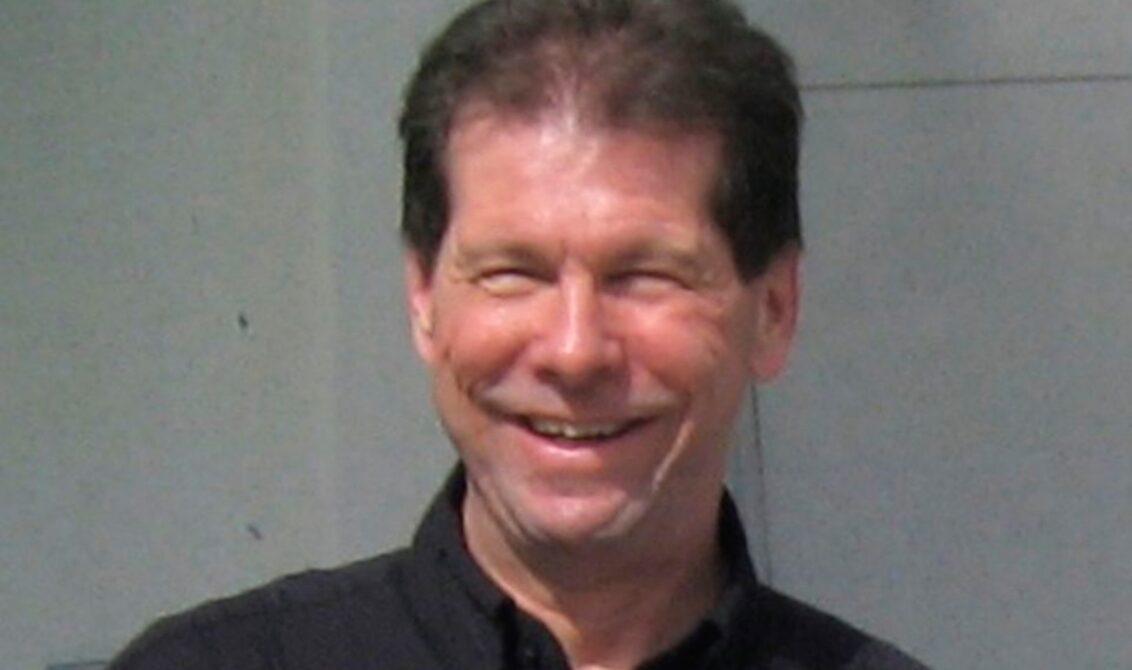
While the true identity of Satoshi Nakamoto, the creator of Bitcoin, has been the subject of debate for many years, the most prominent name in this regard was Hal Finney. Finney’s death and the disappearance of Satoshi Nakamoto to the point that it is not even known whether he is alive or not, constitute the biggest intersection point.
The latest analysis on this subject came from Adam Cochran, known for his assessments in the crypto industry. In a series of posts on X, Cochran stated that he always thought Satoshi was Hal Finney, and that the recent “Satoshi emails” contain signs to strengthen this.
“Finney’s health and his role in the Bitcoin project could be strong indicators of his true identity as Nakamoto.”
Cochran begins this series of tweets on the point that everyone has been waiting for, saying that Satoshi’s retraction in 2010 coincided with Hal Finney’s progression of ALS, which also claimed his life:
I’ve always thought that Hal Finney was the main person behind Satoshi Nakamoto, supported by 1 or 2 other minor characters, and I think the new emails help back that up overwhelmingly. First, we learn that in July 2009. Satoshi did have another job. This is at the same time as Hal was working at the PGP Corporation. For the past few months Hal has had declining health and in Aug gets diagnosed with ALS. Satoshi notes he’ll be busy. Sometime between March 7th of 2010 and May 16th 2010 Satoshi disappears for a bit noting he was busy with other things. This was both when PGP Corporation was being sold to Symantec, and when Hal was starting to experience health decline. On April 26th, 2011, Satoshi’s last known private email goes to Andresen noting he has “moved on to other things”. This is after Hal starts contributing and working on signature verification.”
“Similar movements in terms of self-concealment…”
Cochran also describes how Finney and Nakamoto backed away from events that would have put them at risk and in the spotlight, and argues that they are similar:
“On March 22nd 2013, Hal praises Satoshi’s decision to “disappear gracefully” from the project. Which is odd because Satoshi hadn’t explained leaving to anyone. He vanished, and so many people had the opposite decision. We then learn in a 2014 interview, that Hal’s condition deteriorated to only being able to handle yes/no questions. But also that according to his former boss at PGP he is actually responsible for ghostwriting most of PGP 2.0. The fact that Zimmerman was nearly indicted on arms export controls violations around the encryption tool is why Finney wanted his roll downplayed. It may also explain why Satoshi feared the Wikileaks controversy. He may have seen his old boss take similar heat. The interview takes place about 20 days after the P2P foundation account posted “I am not Dorian Nakamoto.” A simple statement that could be done via family member as its an easy login without needing PGP keys.
The untold detail is that in the interview, Finney, who has ALS, had difficulty speaking and could not answer every question. Therefore, instead of Finney, who was physically unable to use his body at that time, it is stated that the sharing can be also done by family members who can easily access the accounts from the computer.
The Dorian Nakamoto-Satoshi-Hal Finney
At the time, Newsweek magazine completely trusted some of the information provided by its reporter and carried a story on its cover stating that a person named Dorian Nakamoto was the creator of Bitcoin. This story was completely false. Dorian Nakamoto had absolutely no connection with Satoshi Nakamoto.
One detail that Cochran did not mention in his tweets, or perhaps forgot, was that Dorian Nakamoto’s house was located a few blocks away from Hal Finney’s neighborhood. Those who claim that Hal Finney is Satoshi often use this detail as an important piece of information. Satoshi is thought to have created the alias through Dorian Nakamoto.
Satoshi’s use of both American and British English
The analyst also considers Satoshi’s use of both American and British English, a topic that has been debated for years, as well as the fact that his posting times on the forums correspond to PST time zones:
“As we can see from his emails with other contributors, Satoshi frequently sought out support and involvement of others. And all his communication times fell in the PST timezone rage. But some of his emails still have commonwealth spellings. Despite using the word “cheque” in a 2010 email, he had to ask Martti Malmi about payment options in Europe. The UK was part of the EU/EEA something a Brit would know. In 2009, he also said “realize” the US/Canadian spelling that rules out AUS/UK. After his sudden return he wrote “realise”. Many English speakers around the world mix and match American and British spellings – but they tend to be consistent in which they choose. Switching suggests other people or an attempt to hide your writing.”
Satoshi integrates with Hal Finney
At the end of his article, analyst Cochran states that Hal Finney worked with some people who later left the project in the early days of Bitcoin, but Satoshi generally matched with his character:
“I think Hal had some other small contributor early on who left the project. But the bulk of Satoshi was him. By 2010 he knew he was dying and “Bitcoin dev” dies would kill his beloved project. He fiercely hid his identity, after seeing his old boss Zimmerman almost charged with arms dealing charges, over encryption code that Finney himself wrote. So from the start he changed his writing style, referenced British things, but still couldn’t hide his lack of knowledge of the EEA/EU in private conversations.”